
Table of Contents
- At a Glance
- How Migraine Starts in the Brain
- Why Migraines Are More Common in Women
- The Role of Hormones in Migraine
- Migraine Is Not Just Hormonal
- Common Triggers That Interact with Hormones
- The Role of Brain Energy and Metabolic Stability in Female Migraine
- Genetic Susceptibility
- Hormonal Contraception and Migraine
- Why Migraine Patterns Change Over Time
- Are Migraines Different in Women Than in Men?
- Supporting Brain Stability
- Final Thoughts
At a Glance
|
What causes migraines in females? Many women notice that their migraine patterns change throughout life, especially around times of hormonal change such as the menstrual cycle, pregnancy, or the years leading up to menopause. Hormones are an important part of the answer, but they are not the whole explanation.
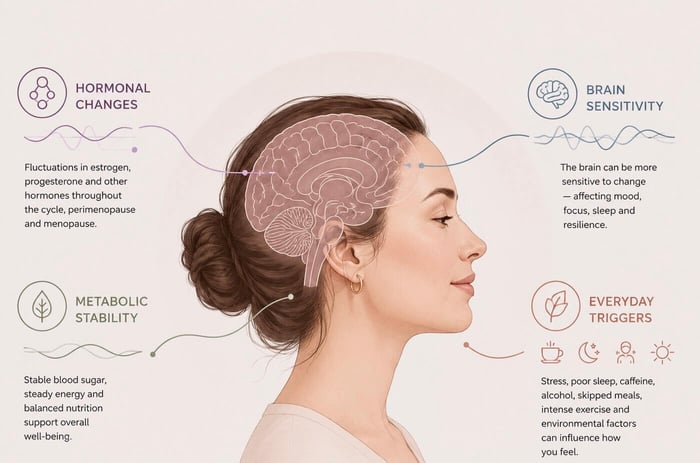
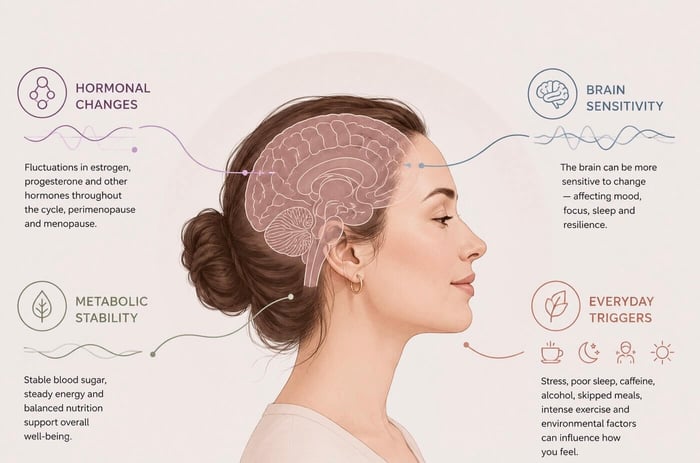
Migraine is shaped by brain sensitivity, genetics, metabolic stability, and everyday triggers that can lower the brain’s migraine threshold.
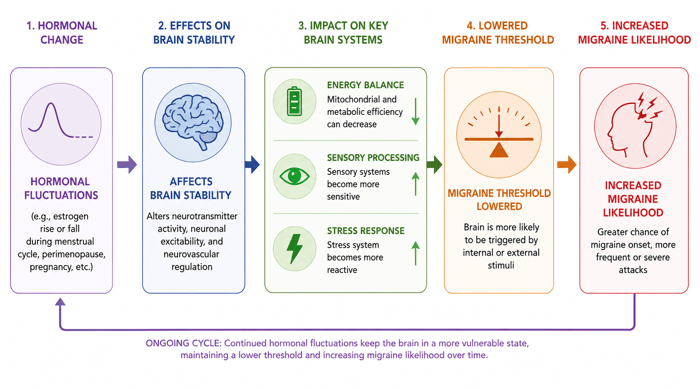
Hormonal changes can influence the brain’s sensitivity to migraine. Estrogen shifts, especially before menstruation, may lower the migraine threshold. During this time, the brain may become less able to tolerate added strain.
This is why migraine in women often follows distinct patterns, even when individual episodes feel unpredictable. Understanding these patterns can make it easier to see how hormones, brain energy, lifestyle factors, and susceptibility interact.
How Migraine Starts in the Brain
Migraine is a neurological condition that involves temporary changes in brain activity (Goadsby et al., 2017).
It is helpful to think about migraine in terms of brain sensitivity: the brain is constantly working to keep electrical activity balanced and stable. When this stability is disrupted, a migraine is more likely to occur.
This can be described as a threshold. The brain can tolerate a certain level of internal and external stress. When that level is exceeded, migraine may occur.
Migraine is rarely caused by a single factor. More often, it reflects a combination of influences that build up and push the brain beyond its point of stability. This helps explain why migraine can feel unpredictable while still following patterns over time, as hormones, lifestyle factors, and other influences interact to shape when it occurs.
Why Migraines Are More Common in Women
Migraine is more common in women than in men, particularly after puberty. This difference is largely linked to hormonal changes. Before puberty, migraine tends to affect boys and girls more equally.
Estrogen plays an important role in regulating brain activity and in pain processing. Changes in estrogen levels can influence how sensitive the brain is to triggers, rather than being a direct cause.
This helps explain why migraine in women often follows patterns, particularly in relation to hormonal changes such as the menstrual cycle or pregnancy. When looking at what causes migraines in women, it is also important to consider concurrent factors such as sleep, stress, and routine.
The Role of Hormones in Migraine
Hormones play an important role in shaping how migraine behaves over time. Rather than being a direct cause of migraine, they influence brain sensitivity and migraine susceptibility.
Estrogen and Brain Sensitivity
Estrogen affects how the brain regulates activity and processes pain, including how signals are transmitted between nerve cells. It also interacts with systems linked to serotonin, which helps regulate mood and sensory perception (Reddy et al., 2021).
As estrogen levels change, the brain may become more or less sensitive to triggers, which can increase the likelihood of migraine.
Why Drops in Estrogen Matter
Many women experience migraine when estrogen levels fall. This drop occurs just before menstruation begins, making it harder for the brain to maintain stable activity and making migraine easier to develop.
This pattern is known as estrogen withdrawal, but can be understood more simply as a period where the brain becomes more sensitive (Raffaelli et al., 2023).
The Menstrual Cycle and Migraine Timing
Many women notice that their migraine patterns are linked to the way estrogen levels rise and fall throughout the menstrual cycle.
Some may experience migraine just before or during their period, while others find that symptoms are less noticeable at certain points in the cycle.
These patterns are not the same for everyone, and they often become clearer over time.
Hormonal Life Stages
Hormonal changes throughout a person’s life can also affect migraine patterns.
- Puberty: Migraine becomes more common, especially in girls.
- Pregnancy: Some women notice migraine improves, while others continue to experience symptoms.
- Perimenopause: Hormone levels may fluctuate more widely, and migraine patterns may become less predictable.
These life stages can have a noticeable effect on migraine occurrence and predictability.
Additional Biological Factors
Other biological processes during the menstrual cycle can also influence migraine patterns.
During menstruation, the body releases hormone-like substances known as prostaglandins. These play a role in inflammation, uterine cramping, and pain signaling. Higher prostaglandin activity may add to migraine susceptibility around the time of a period.
Hormonal changes can also affect how pain signals are processed by influencing chemical messengers involved in pain and sensory sensitivity. This may make the nervous system more sensitive at certain points in the cycle.
Together, these factors can add to the overall load on the brain, especially when they occur alongside estrogen changes, disrupted sleep, stress, or other potential migraine triggers.
Migraine Is Not Just Hormonal
Although hormones can influence migraine patterns, they are only one of several factors that shape brain sensitivity.
A drop in estrogen can lower the migraine threshold. As estrogen levels fall, the brain may become more sensitive to internal and external stressors. These stressors may include sleep disruption, stress, missed meals, dehydration, changes in routine, sensory overload, and metabolic strain.
When several of these factors occur together, they can add to the overall load on the brain. This means the brain is managing several internal and external stressors at once. Whether this leads to migraine depends on whether that load pushes the brain beyond its threshold.
This helps explain why migraine patterns can feel inconsistent. Hormonal changes may follow a monthly cycle, but their effect can vary depending on the brain’s overall level of sensitivity. Patterns may also shift during puberty, pregnancy, perimenopause, or other stages when hormone levels change more widely. Chronic migraine can involve the same threshold model, but with the brain remaining more sensitive over time.
Factors That Can Influence the Migraine Threshold
Factor | How it may affect migraine patterns |
|---|---|
Estrogen changes | May lower the migraine threshold and increase sensitivity around menstruation or other hormonal shifts. |
Sleep disruption | Can make it harder for the brain to maintain stable activity. |
Stress and recovery | May increase nervous system load, especially when stress is sustained or the body has limited time to recover. |
Missed meals or blood sugar shifts | Can affect energy availability and metabolic stability. |
Dehydration | Can affect fluid balance and add to the overall load on the brain. |
Sensory triggers | Bright light, strong smells, noise, or screen exposure may be more likely to trigger symptoms when brain sensitivity is elevated. |
Genetic susceptibility | Can influence baseline brain sensitivity and how easily the migraine threshold is crossed. |
Common Triggers That Interact with Hormones
Hormonal changes can make the brain more sensitive to everyday stressors that might otherwise be easier to tolerate.
Sleep disruption is a good example of this. Poor or irregular sleep, as well as changes in routine, can make it harder for the brain to maintain stable activity. When this occurs during a period of hormonal change, the migraine threshold may be easier to cross.
Stress can also act as a migraine trigger, especially when the nervous system has had little time to settle after prolonged strain. Migraine may be more likely to occur during times of sustained stress or after stress begins to ease.
Missed meals, dehydration, and blood sugar fluctuations can all add to the overall load on the brain. These changes can affect energy availability, fluid balance, and metabolic stability, all of which may influence how well the brain maintains stable activity.
Sensory triggers may be harder to tolerate when brain sensitivity is elevated. Bright light, strong smells, noise, or screen exposure may not cause migraine on their own, but they can contribute to migraine when the threshold is already lower.
This is why identifying one trigger alone is not always useful, as migraine often reflects the combined effect of several factors. Hormonal changes may make the brain more vulnerable at certain times, but they are usually part of a wider pattern.
The Role of Brain Energy and Metabolic Stability in Female Migraine
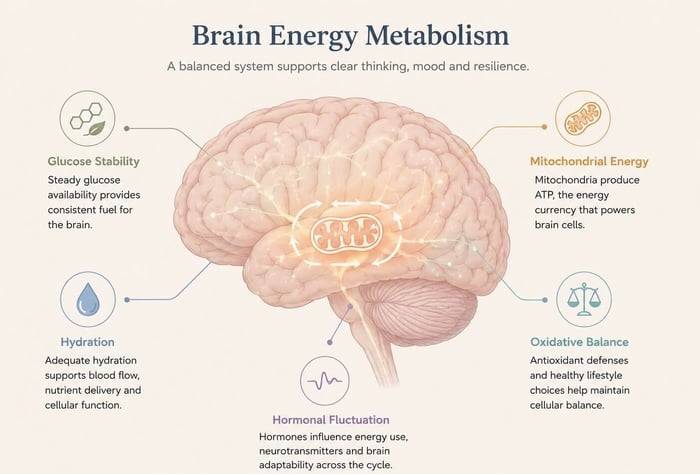
The brain has high energy demands. When the systems that support stable brain activity come under strain, migraine is more likely to occur.
Stable brain signaling requires that nerve cells send and receive messages in a controlled, balanced way. This depends on a steady supply of energy, balanced fluids, and well-regulated chemical activity.
When these systems are disrupted, the brain may find it harder to maintain stable activity.
Metabolic changes can also affect migraine susceptibility. Fluctuations in blood sugar, missed meals, dehydration, or changes in energy availability may all add to the brain’s overall load, especially when hormone levels are also shifting.
Hormones may interact with these processes in several ways. Estrogen changes can influence glucose regulation, nervous system sensitivity, and mitochondrial function. These systems help regulate how energy is produced and used in the brain. When mitochondrial function comes under strain, oxidative stress may also increase, adding further pressure to the mechanisms that help keep brain activity stable (Gross et al., 2021).
This does not mean that migraine is only a metabolic issue. Energy and metabolic stability are part of the wider threshold model, with several factors combining to make migraine more likely at certain times.
Genetic Susceptibility
Some people are more naturally prone to migraine because of inherited differences in how the brain regulates sensitivity and stability.
Genetics can influence brain sensitivity and how easily the migraine threshold is crossed. This shapes how the nervous system responds to hormonal changes, stress, sleep disruption, sensory input, or changes in energy availability.
This does not mean migraine is controlled by genes alone. Genetic susceptibility is one part of the wider picture, alongside hormones, lifestyle factors, and other triggers that shape migraine patterns.
Hormonal Contraception and Migraine
Hormonal contraception can also influence migraine patterns in women.
Because contraceptives affect hormone levels, they may influence the timing, frequency, or predictability of migraine. Some women notice improvement while using hormonal contraception; others may find that migraine becomes more frequent or changes in character.
The effect can depend on the type of contraception, the hormone dose, whether estrogen is included, and the type of progestin used. It can also depend on whether a person has migraine with or without aura, an important factor when choosing hormonal contraception.
This is a further example of migraine being shaped by several factors at once. Hormonal contraception may have an influence, but its effect often depends on the wider pattern of brain sensitivity, triggers, and individual susceptibility.
Why Migraine Patterns Change Over Time
Migraine patterns may change as the factors influencing brain sensitivity change.
Hormonal shifts are one reason these patterns may change. Migraine may become more noticeable after puberty, change during pregnancy, or be less predictable during perimenopause, when hormone levels fluctuate more widely.
Changes in daily life and routines can also affect migraine patterns. Sleep patterns, stress levels, eating habits, hydration, workload, and time to rest after stress may all affect how much strain the brain is managing.
Understanding migraine patterns over time is often more useful than looking at one episode in isolation. A single migraine may seem difficult to explain, but repeated patterns can show how hormonal changes, triggers, and brain sensitivity interact.
Are Migraines Different in Women Than in Men?
Migraine is the same neurological condition in women and men, but the way it appears can differ.
In women, migraine is more likely to be influenced by hormonal patterns. This may affect when migraine occurs, how predictable it feels, and whether symptoms cluster around certain points in the menstrual cycle or life stages such as pregnancy and perimenopause.
In men, migraine patterns are not tied to reproductive hormone cycles. They are influenced more by factors such as genetics, sleep, stress, sensory triggers, metabolic changes, or routine.
Not all women follow the same migraine pattern. For some, hormonal changes play a strong role in when migraine occurs. For others, sleep, stress, sensory triggers, metabolic changes, or genetics may be more influential.
Migraines are not a different condition in women, but they are often shaped by different influences. In women, reproductive hormone patterns can affect migraine frequency, timing, and susceptibility. The wider threshold model still applies.
Supporting Brain Stability
Migraine is influenced by brain sensitivity and the overall load placed on the brain. Supporting stability starts with the systems that help regulate brain activity.
Consistent sleep, regular meals, hydration, and steady routines can all help reduce strain on the brain. Likewise, managing sharp swings in blood sugar, allowing time to recover after stress, and limiting sensory triggers such as bright light, strong smells, noise, or prolonged screen exposure can support a more stable internal environment.
Metabolic stability may be especially relevant at times when hormonal changes make the brain more sensitive. Because the brain has high energy demands, changes in energy availability, mitochondrial function, and oxidative stress can all influence how well it maintains stable activity.
Brain Ritual® is designed to provide nutritional support for this aspect of migraine biology. It contains exogenous ketone bodies, magnesium, riboflavin, CoQ10, electrolytes, and trace minerals to help support brain energy metabolism, mitochondrial function, and oxidative stress balance.
Learn how Brain Ritual® supports brain energy needs as part of a wider stability model that also considers sleep, stress, hydration, hormones, and triggers.
Brain Ritual® is a medical food designed for the dietary management of migraine. It is not intended to diagnose, treat, cure, or prevent any disease.
Final Thoughts
Migraine in women is often shaped by hormonal change. Even so, hormones are only one part of the wider picture.
Estrogen shifts can influence brain sensitivity, migraine timing, and the likelihood of symptoms occurring around menstruation or during other hormonal life stages. Migraine usually reflects several factors acting together, including sleep, stress, genetics, sensory triggers, hydration, and metabolic stability.
Looking at your migraine patterns over time can make it easier to understand why symptoms appear when they do. A single trigger may not explain the full pattern. Brain sensitivity, threshold, hormonal change, and overall load all need to be considered together. This can help explain why patterns shift at times when hormones fluctuate, and why migraine can feel less random even when individual episodes are difficult to predict.