

Table of Contents
- At a Glance
- What Migraine Aura Feels Like
- Why Estrogen Can Influence Migraine with Aura
- How Estrogen Affects Brain Activity During Aura
- How Hormonal Changes Can Affect Aura
- Common Concerns About Estrogen, Aura, and Circulation
- Practical Ways to Support Stability During Hormonal Shifts
- Brain Ritual®: Nutritional Support for Migraine Sensitivity
- Common Questions
- Final Thoughts
At a Glance
|
Hormonal shifts can make migraine feel harder to anticipate, especially when they influence the timing or intensity of any aura you may experience. You might notice different visual patterns or a changing intensity that seems to arrive without warning. These changes are often experienced around the time of your cycle, during pregnancy, in the months after giving birth, during perimenopause, or when starting or adjusting a hormonal contraceptive. This can be very unsettling when you are trying to better understand why your symptoms shift during times when your hormones are changing.
These shifts in migraine symptoms often make people think about the connection between estrogen and migraines with aura, especially when their symptoms seem to move in step with hormonal rises and dips. While every person’s experience is different, many of the most obvious shifts tend to appear when estrogen is less stable.
Here, we’ll take a look at what is known about migraine with aura and estrogen, what tends to show up as a recognizable pattern, and how these hormonal changes may shape the way your aura feels. The goal is to give you a clearer sense of what your symptoms mean so you can feel better prepared to navigate the different stages of hormonal change.

What Migraine Aura Feels Like
Migraine aura usually appears as a temporary change in vision, sensation, or speech. Many people notice shimmering lights, blind spots, zigzag patterns, or moments when their vision feels uneven, with things being slightly out of focus. You may also notice tingling, numbness, or brief difficulty finding words.
To give a clearer sense of what this can feel like, common aura experiences include:
shimmering or flickering lights
blind spots or gaps in vision
zigzag or wavy lines
tingling sensations
numbness
brief difficulty finding words
Aura can happen with or without head pain, and it often builds over several minutes before fading. Some people see similar patterns each time, while others notice that their aura shifts depending on what their body is going through.
These changes can become more noticeable during hormonal fluctuations, which is why many people notice stronger or more variable aura patterns during certain times of the month or at times of major hormonal transition.
Why Estrogen Can Influence Migraine with Aura
A Quick Look at Estrogen
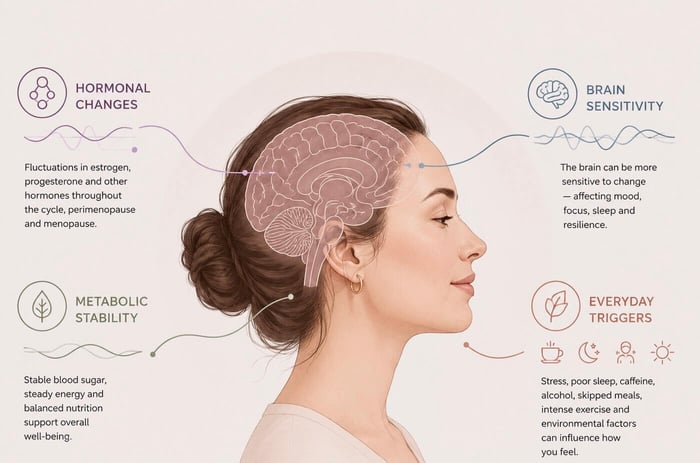
Although many people think of estrogen mainly as a reproductive hormone, it actually influences many systems throughout the body. It helps regulate the menstrual cycle, supports mood and energy, and shapes how different parts of the brain communicate with one another. As estrogen naturally rises and falls over the course of the month and throughout the many stages of life, it can influence how sensitive the brain feels to internal and external triggers, which helps explain why estrogen and migraines with aura often appear connected in people’s experiences.
How Fluctuations Affect Your Brain’s Sensitivity
For many people, the brain feels most sensitive not when estrogen is high or low, but when it is changing quickly. Sudden rises or drops in estrogen can lead to moments when the brain feels more reactive and more easily tipped toward symptoms. These patterns often follow predictable timing across the menstrual cycle, with many people noticing their aura appearing just before their period.
How Hormones Can Change the Way Your Aura Feels
An aura may change in character depending on what your body is going through. Visual aura may feel more prominent at certain times, with shimmering lights or blind spots becoming easier to notice. Sensory aura, such as tingling or numbness, can also shift in timing or intensity. Some people experience brief changes in speech or language, and it is possible to have more than one type of aura during the same hormonal phase. Over time, these patterns can become easier to recognize, especially when they tend to reappear at the same points in your cycle or during other predictable hormonal shifts, such as perimenopause or postpartum changes.
How Estrogen Affects Brain Activity During Aura
Migraine aura is often linked to a wave of electrical and chemical activity in the brain known as cortical spreading depression (CSD; Costa et al., 2013). This refers to a slow-moving shift in neuronal activity that travels across parts of the cortex, creating temporary changes in vision, sensation, or speech. Although the term can sound confusing outside a scientific context, “depression” here simply describes a temporary dip in neuronal activity, not an emotional or psychological state.
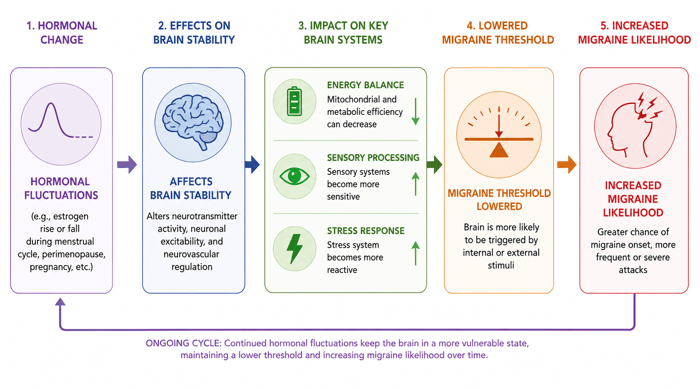
Estrogen appears to influence how easily the CSD wave begins. Research suggests that estrogen can affect neuronal excitability (how strongly nerve cells respond to stimulation). When estrogen levels remain steady, the brain’s communication pathways tend to function more predictably. When estrogen levels drop rapidly, certain cortical regions may become more sensitive to the triggers that initiate the CSD wave, which may make aura more likely.
Several overlapping processes may be involved. Estrogen interacts with neurotransmitters that shape neural signaling, including pathways involved in sensory and visual processing.
It also influences vascular responsiveness in the brain and affects how neural tissues react to internal or environmental changes. Estrogen also affects the cellular energy-metabolism pathway. Shifts in energy availability can influence how susceptible the brain is to sensory disturbances.
Taken together, these processes help explain why aura may shift at times when estrogen levels fluctuate more sharply. The science suggests that, rather than there being a single isolated trigger, several interacting mechanisms work together to shape the brain’s response to hormonal shifts. This framework helps clarify why many people notice their aura patterns shifting in step with hormonal changes.
Estrogen, Energy Metabolism, and Oxidative Stress
Estrogen plays an important protective role in the brain that is especially relevant for migraine with aura. It supports how brain cells produce and use energy by improving mitochondrial efficiency and glucose utilization, which helps neurons remain more stable and less likely to become overly excitable. This is important because migraine aura is closely linked to energy stress in the brain and increased cortical excitability.
Beyond its role in energy production, estrogen also acts as a natural antioxidant. It helps limit oxidative stress and inflammation by supporting the brain’s own antioxidant systems and by reducing the buildup of reactive oxygen species (ROS) that can irritate nerve tissue.
Estrogen also influences metabolic regulation and insulin sensitivity in the brain (how efficiently brain cells respond to and use available glucose), which further affects how consistently neurons can access and use energy. These metabolic and antioxidant supports are stronger when estrogen levels remain steady. When estrogen fluctuates or drops, such as around menstruation, after pregnancy, or during perimenopause, the brain temporarily loses some of this protection. This combination of reduced energy stability and increased oxidative stress helps explain why hormonal transitions can lower the threshold for migraine aura by making cortical tissue more excitable and lowering the threshold for symptoms to appear.
How Hormonal Changes Can Affect Aura
Puberty and Early Cycles
Aura often first appears during puberty, a time when hormone levels begin to fluctuate more sharply. In the early years of puberty, cycles are often irregular, and this unpredictability can make aura feel more intense or harder to anticipate. Many people notice that their symptoms gradually settle as they get a little older and their cycle becomes more consistent. Some younger people also experience other childhood migraine patterns during this stage, and you can read more about one of these here: abdominal migraine.
Monthly Cycle
Menstrual migraines with aura often follow a fairly rhythmic pattern across the month. Aura often appears in the days leading up to a period, when estrogen levels begin to dip. Changes can also appear around the mid-cycle, though the timing can vary from person to person. With experience, it usually becomes easier to recognize the points in your cycle when aura is more likely to show up.
Hormonal Contraceptives
When you start, stop, or adjust hormonal contraceptives, aura patterns may shift as your body adapts to a new hormonal environment. You might notice that your aura feels more predictable when your hormone levels stay steady. Changes in dosage or contraceptive type can make symptoms feel different, even if only for a short while. Because people respond to hormonal changes in different ways, the pattern you notice may not match what other people experience.
Perimenopause
Perimenopause is one of the most common times when aura patterns begin to change. Estrogen can fluctuate widely during these years, making your aura feel stronger, more frequent, or simply different from what you are used to. Many people find this phase unpredictable, but their patterns often become clearer again as hormone levels settle. It’s also very common to have questions about hormone therapy at this point, and you can learn more here: can you take HRT if you have migraines with aura.

Common Concerns About Estrogen, Aura, and Circulation
Many people naturally have questions when they see topics like circulation or vascular health discussed alongside migraine with aura. These subjects can feel technical or worrying at first, even though the conversations in research often reflect broader scientific curiosity rather than individual risk.
Why These Topics Come Up in Research
Migraine with aura is often discussed in research alongside topics related to circulation and vascular health.
These topics often appear in studies that explore hormonal changes or hormonal treatments, mainly because the hormonal and vascular systems interact in complex ways, and can influence one another.
For most people, research does not point to a strong overall concern in these areas, and any questions about circulation or vascular health are usually considered on an individual basis because many factors can be involved.
Some epidemiological studies have found a modest but statistically significant increase in vascular risk among people with migraine with aura, although the absolute risk remains low for many and depends on individual factors (Kurth et al., 2006; Bigal et al., 2010; Sacco & Kirth, 2014; Lucas, 2021). The aim of this research is to understand how these systems connect, not to imply that everyone with aura will share the same experience.
When to Pay Attention to New Aura Patterns
Hormonal shifts can sometimes change the way an aura appears or how often it shows up. People often notice:
increasing frequency of aura
new or unfamiliar visual features
aura that lasts longer than usual
aura appearing without a headache (if this is new for them)
These observations can help you understand how your symptoms change over time. Many people find that their patterns become clearer as hormone levels settle, and not every change is a sign of something concerning. Although most changes settle with time, some shifts deserve a bit more attention. If you notice aura symptoms that seem very different from your usual pattern, it can be helpful to reach out to a healthcare professional for personalized guidance.
Some things to look out for include:
symptoms that start suddenly and feel very different from your typical aura
neurological changes that do not fully resolve
aura that lasts much longer than your usual pattern
new neurological symptoms that fall outside your typical migraine history
These situations do not automatically mean that something serious is wrong. They are simply moments when seeking medical advice may help you gain a better understanding of what is happening and provide clearer insight into your symptoms.
Practical Ways to Support Stability During Hormonal Shifts
Hormonal changes can often make aura feel more noticeable, and small lifestyle habits can support a steadier sense of brain and body balance. The following simple suggestions may help offer a bit more stability when your hormones are fluctuating.
Keep Meals and Hydration Steady
Regular eating can help keep energy levels even, which may help your brain feel steadier during hormonal ups and downs. Avoiding long gaps between meals can make shifts feel less intense. Sipping water throughout the day, rather than waiting until you feel overly thirsty, can help support a more even balance of energy and electrolytes.
Support for Energy Metabolism
Some people find it helpful to focus on foods and nutrients that support natural energy processes in the brain and body. This can include magnesium-rich foods, B vitamins, healthy fats and oil, and sources of electrolytes. Even small increases in these foods can offer gentle support and help your brain feel a little less up and down during hormonal shifts.
Light Exposure, Sleep, and Daily Rhythms
Daily rhythms can have a noticeable effect on how steady you feel throughout the day. Getting natural light in the morning, keeping regular sleep and wake times, and keeping your day fairly consistent in terms of meals, movement, and wind-down habits can help your body stay aligned with its natural circadian rhythms. This steadiness can make hormonal fluctuations feel less overwhelming.
Keeping Track of Your Patterns
Tracking does not need to be overcomplicated or time-consuming. Simply noting the days when your aura appears, where you are in your cycle, or any clear changes in how your migraines tend to respond can help you spot a few predictable patterns over time. With consistency, this simple tracking can help you recognize your own rhythms and understand any changes more easily.
Brain Ritual®: Nutritional Support for Migraine Sensitivity
If you’re looking for ways to support your system more holistically when hormonal changes make your aura feel more noticeable, nutritional strategies may provide an added layer of support. Focusing on steady energy, reducing oxidative stress, and keeping electrolytes balanced can help some people feel more grounded during times of hormonal fluctuation.
If you are looking for a more structured nutritional approach, Brain Ritual® is a medical food for the dietary management of migraines. Its formula includes nutrients that support energy metabolism, mitochondrial function, and antioxidant activity, areas that may feel a little more reactive during hormonal shifts.
A key component of Brain Ritual® is the inclusion of ketone bodies (BHB) (Learn more), which serve as an efficient alternative energy source for the brain and may help support a steadier sense of energy during hormonal fluctuations. Paired with magnesium, riboflavin, CoQ10, electrolytes, and other carefully selected nutrients, it provides a comprehensive nutritional foundation designed to fit easily into your daily routine.
You can explore the full nutritional breakdown of Brain Ritual® and purchase it here.
Disclaimer: Brain Ritual® is a medical food for the dietary management of migraine and is not intended to diagnose, treat, cure, or prevent any disease. This content is for informational and educational purposes only and is not intended as medical advice.
Common Questions
Can estrogen cause migraine with aura?
Not directly. Estrogen does not cause aura, but changes in estrogen levels can shift how sensitive your brain feels. Many people ask does estrogen cause migraines? Research suggests that fluctuations, rather than estrogen on its own, are what tend to make aura or migraine symptoms more noticeable.
Why does my aura get worse around my period?
Many people find that aura is more common in the days before a period. This is when estrogen naturally dips, and the brain can respond to that shift with stronger or more frequent aura symptoms.
Can hormonal birth control affect aura?
It can for some. When you start, stop, or adjust hormonal contraceptives, your body adapts to a new hormonal pattern, and aura may shift during that process. How this plays out varies widely from person to person. You can read more about hormonal birth control and its relationship with migraine here.
Is there a link between migraine with aura and stroke?
Research has explored this question for many years. Some large studies have found a modest statistical increase in vascular risk in people with migraine with aura, although the absolute risk remains low for many individuals and depends on personal factors like age, smoking status, and overall health. These discussions are usually shaped by a person’s overall risk profile, rather than by migraine alone, which is why healthcare guidance tends to be individualized.
Can perimenopause trigger new aura symptoms?
The perimenopause is one of the most common times for aura patterns to change. As estrogen levels fluctuate more widely during these years, some people notice that aura appears for the first time, becomes more frequent, or feels different from what they are used to. This phase can feel unpredictable, but patterns often become clearer again as hormone levels settle. You can read more about menopause and migraine here.
Final Thoughts
Hormonal shifts are behind what makes estrogen and migraines with aura feel unpredictable, especially when estrogen levels rise or fall more sharply than usual. As you begin to notice how these changes shape your symptoms, the patterns often become easier to recognize and less unsettling. Many people find that their aura follows a clearer rhythm across different phases of hormonal change, even if it takes time to see it.
With this understanding, the ups and downs of estrogen cycling can feel more manageable, helping the different stages of your cycle or life transitions feel a little easier to navigate.