Table of Contents
- At a Glance
- Can Ginger Help with Migraines?
- What Does the Research Say?
- Why Ginger May Help
- Ginger for Migraine Nausea
- Ginger Tea for Migraines
- Other Ways to Use Ginger
- How Much Ginger Should You Take?
- When Ginger May Be Most Useful
- Ginger Side Effects and Safety Considerations
- Ginger as Part of a Broader Migraine Support Plan
- Final Thoughts
At a Glance
|
Ginger has long been used to support nausea, digestive discomfort, and stomach upset. It has also been studied for motion sickness, pregnancy-related nausea, postoperative symptoms, pain, and inflammatory signaling (Mao et al., 2019). This helps explain why many people turn to ginger tea when they feel unwell.
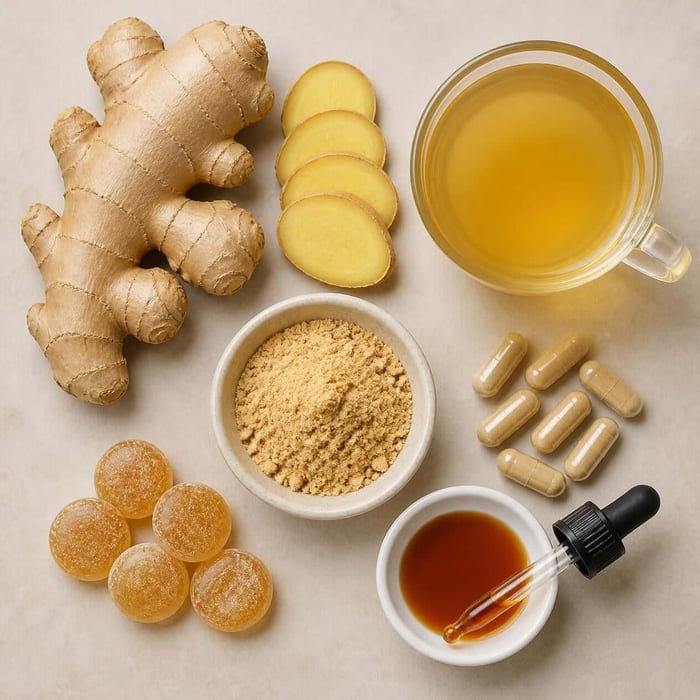
If nausea or digestive changes are part of your migraine attacks, you may wonder whether ginger is good for migraines or if ginger tea can help. Ginger is easy to find and use and comes in several forms, including fresh root, ground powder, tea, capsules, and extracts.
Early research suggests that some ginger preparations may help ease nausea and possibly reduce pain during a migraine attack. However, the evidence remains limited.
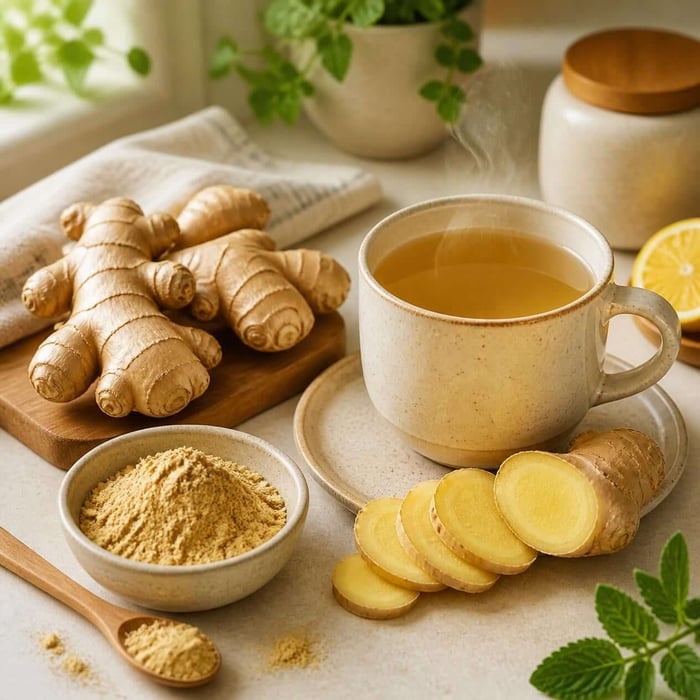
Here, we look at the evidence on using ginger for migraines, how ginger tea and other preparations can be used, and what to consider when choosing between fresh ginger, powders, and concentrated extracts. 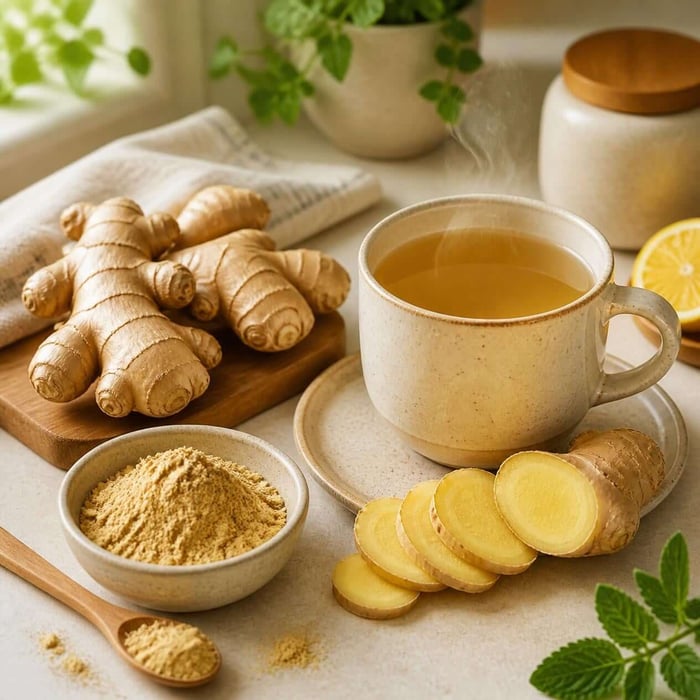
Can Ginger Help with Migraines?
Ginger may offer some support for migraine symptoms, particularly nausea and digestive discomfort. Some studies suggest that concentrated ginger preparations may also help reduce pain during an acute migraine attack, although further research is needed (Maghbooli et al., 2014).
People can use ginger in several different ways during a migraine attack. It is thought to help settle migraine-related nausea, provide digestive comfort, or offer additional support for pain. These possible benefits can vary from person to person, and ginger will not suit everyone.
The evidence for the use of ginger in the prevention of migraine attacks is less convincing. In a placebo-controlled trial involving 107 adults with episodic migraine, ginger extract did not provide greater benefit than placebo for migraine prevention (Martins et al., 2020). Ginger is best viewed as a possible source of symptom support rather than a standalone approach to acute or preventive migraine care.
Individual responses to this spice can also differ. Some people find ginger tea soothing when nausea begins. Others notice little benefit, while some experience heartburn or stomach irritation. The form used is also important, since fresh ginger, tea, powder, and concentrated extracts can contain different amounts and proportions of active compounds such as gingerols and shogaols.
What Does the Research Say?
There have been a few small-scale clinical studies examining the use of ginger during migraine.
In one randomized trial, 100 adults with migraine without aura received either 250 mg of ginger powder or 50 mg of sumatriptan, a medication used to treat acute migraine attacks. Headache severity improved in both groups over the following two hours, with researchers reporting similar overall results between the groups (Maghbooli et al., 2014). However, the study did not include a placebo group, so its findings are not enough to establish that ginger is equivalent to sumatriptan.
Another placebo-controlled study followed 60 adults receiving hospital treatment for an acute migraine attack. All participants received intravenous ketoprofen and either 400 mg of ginger extract or a placebo. Those given ginger were more likely to report improvements in pain and functional ability over the following two hours (Martins et al., 2019). It is worth noting that as ginger was added to ketoprofen, the trial tested it as additional support rather than as a standalone treatment.
A later meta-analysis combined three randomized trials and reported possible improvements in two-hour pain scores and pain freedom with ginger (Chen and Cai, 2021). The small number of studies and participants means that these results should be interpreted cautiously.
The available studies are difficult to compare directly because they used different ginger preparations, doses, comparison groups, and measures of improvement. Ginger powder and concentrated extracts may also differ in strength and composition.
Overall, the research suggests that ginger may offer some support during an acute migraine attack, but the evidence is not yet strong enough to determine the most effective form or dose. Larger, well-designed trials are needed to confirm these findings and identify who may benefit most from ginger.
Why Ginger May Help
How ginger may support migraine symptoms is not yet fully understood. Its possible effects are likely to involve several pathways rather than a single mechanism.
Ginger and Nausea
Ginger has been more widely studied for its effects on nausea and vomiting than for migraine itself. Research into pregnancy-related sickness, postoperative symptoms, and chemotherapy side effects suggests that ginger may help with nausea in some people (Anh et al., 2020).
One possible explanation is that ginger may help food move through the digestive system and help the stomach empty more efficiently. Compounds found in ginger may also interact with serotonin-related signaling pathways involved in nausea and vomiting (Lete and Allué, 2016).
Ginger and Pain Signaling
Ginger contains naturally occurring compounds called gingerols and shogaols. Laboratory research suggests that these compounds can interact with pathways involved in sensing and transmitting pain.
One pathway under investigation involves TRPV1, a receptor found on sensory nerves that responds to heat, irritation, and other pain-related signals. Laboratory studies suggest that gingerols, shogaols, and zingerone can activate this receptor. Initial activation stimulates the nerve, but continued exposure may make it less responsive to later pain signals (Yin et al., 2019; Cheng et al., 2024).
Ginger and Inflammatory Pathways
Ginger compounds may also affect inflammatory signaling. Human studies in several health conditions have reported changes in blood markers linked with inflammation, including C-reactive protein and certain inflammatory cytokines, following ginger supplementation (Morvaridzadeh et al., 2020).
Migraine itself is not simply an inflammatory condition, and inflammation alone cannot explain what happens during an attack. Migraine appears to involve several interacting processes, including changes in nerve signaling, sensory processing, blood vessel regulation, brain energy use, and the response to physiological stress.
Any effect ginger has on inflammatory pathways may contribute to its potential role in migraine, but it is unlikely to provide a complete explanation.
Ginger, Digestion, and Medication Absorption
Digestion can slow during some migraine attacks (Aurora et al., 2013). This process is known as gastric stasis and means that food and other stomach contents take longer to reach the small intestine.
Nausea and vomiting can also make it difficult to eat, drink, or take oral medication. Slower stomach emptying may delay the absorption of some medicines. This does not happen with every medication or during every migraine attack.
Ginger may support digestive comfort and stomach movement in some settings. Currently, there is not enough evidence to show that it improves medication absorption during migraine.
Ginger for Migraine Nausea
Many people try ginger during migraine to help with nausea. It can be useful when queasiness begins, food is hard to tolerate, or a warm drink feels easier than eating.
Ginger is often used at the first signs of an attack, especially when nausea appears alongside tiredness, reduced appetite, or digestive discomfort. Ginger tea can be sipped slowly on its own or alongside water and a light meal if food is still manageable.
When nausea makes eating difficult, a small amount of ginger may be easier to tolerate than a stronger, more concentrated preparation. The taste and smell of ginger can feel intense during migraine, and not everyone will respond to it in the same way.
Ginger is best viewed as a supportive option rather than as a substitute for established anti-nausea care. It may be useful for mild nausea, but it is unlikely to be enough when vomiting is severe or persistent. This is because ongoing vomiting can make it difficult to keep down fluids.
Ginger Tea for Migraines
Ginger tea is one of the simplest ways to use ginger during migraine. It can be easier to sip than eating solid food, especially when nausea or digestive discomfort is present.
How to Make Fresh Ginger Tea for Migraines
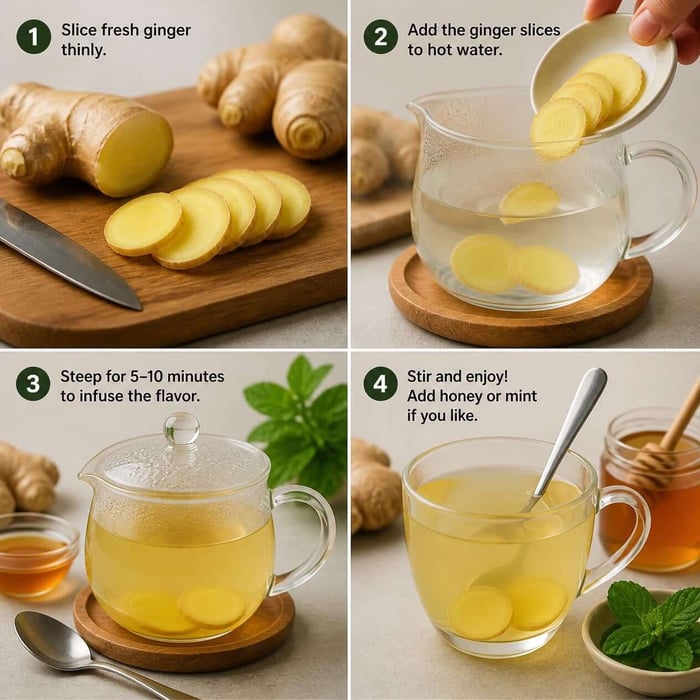
Add four to six thin slices of fresh ginger, or a small amount of grated ginger, to a cup of just-boiled water. Let it steep for around 5 to 10 minutes, then strain if needed.
The strength can be adjusted according to taste and tolerance. Using more ginger, steeping it for longer, or gently simmering it will produce a stronger tea, though this may feel too intense during migraine.
Honey, lemon, or mint can be added for extra flavor in migraine teas if they suit your individual tolerances. Be aware that citrus and other strong flavors may act as migraine triggers for some people.
Ginger tea bags can be a convenient option. They usually contain dried ginger and should be prepared according to the package directions. The flavor and amount of active compounds can vary between products, so you may need to try a few options to find one that suits your taste and tolerance.
When to Drink It
Ginger tea can be tried at the first signs of nausea or digestive discomfort. You can also drink it during the prodrome or headache phase if you find warm drinks comforting.
When nausea is strong, it can be easier to take small sips rather than drink a full cup at once.
Practical Limitations
Ginger tea does not provide a standardized amount of gingerols, shogaols, or other active compounds. The amount present can vary depending on the type and amount of ginger used, how finely it is cut, and how long it is steeped.
The clinical studies discussed earlier used ginger powder or standardized extracts rather than homemade ginger tea. Although fresh ginger tea may offer soothing support during migraine, it will not provide the same measured dose of ginger used in these studies.
Strong ginger tea may irritate the stomach or worsen heartburn and reflux in some people. It may also be difficult to drink during severe nausea or vomiting.
Other Ways to Use Ginger
There are many ways to use ginger beyond making tea. Like other spices and herbs for migraines, the most suitable form may depend on convenience, taste, and how easy it is to judge the amount being used.
Fresh Ginger
Fresh ginger can be added to meals and soups, or used as an ingredient in smoothies. This makes it a simple food-based option for people looking to include ginger as part of a migraine-supportive diet. The amount used can also be adjusted according to taste.
Ground Ginger
Ground ginger is inexpensive, stores well, and is easy to add to oatmeal, soups, smoothies, and other foods. Its flavor and strength may vary between products. Ground ginger can also taste more concentrated than fresh ginger, so smaller amounts may be easier to tolerate at first.
Ginger Capsules
Ginger capsules provide a stated amount per capsule or serving, making them easier to measure than fresh ginger or tea. Many whole ginger powder products contain around 500 to 550 mg per capsule, but amounts can vary, so check the label of the specific product.
It is important to check whether a capsule contains whole ginger powder or a concentrated extract. Whole ginger powder contains the dried root, while extracts can concentrate its active compounds into a smaller amount. Knowing the form helps you understand the likely strength of the product and whether it resembles the preparation used in a particular study. For this reason, products should not be compared on milligrams alone.
Ginger Extracts and Lozenges
Ginger extracts provide a more concentrated form of ginger, while lozenges may be easier to use when drinking or eating feels difficult.
Some lozenges and flavored products may contain sugar, sweeteners, flavorings, or other added ingredients. The level of gingerols, shogaols, and other active compounds can also differ between brands.
Ginger Chews, Crystallized Ginger, and Drinks
Ginger chews, crystallized ginger, and commercial ginger drinks are other convenient options. However, check the label carefully as some products contain mainly sugar, flavoring, or only a small amount of ginger.
Ginger is also available as an essential oil, although this is used differently from food, tea, or supplements.
Whichever form you choose, it is worth starting with a small amount and seeing how your body responds.
How Much Ginger Should You Take?
There is no universally established dose of ginger specifically for migraine. The small clinical studies conducted so far have used different forms, amounts, and dosing schedules, so there is not yet a clear dose that will suit everyone.
In one study of acute migraine, participants took 250 mg of ginger powder when an attack began (Maghbooli et al., 2014). A different acute-treatment study used 400 mg of ginger extract containing 5% active ingredients. This was given alongside intravenous ketoprofen rather than used on its own (Martins et al., 2019).
A migraine prevention study provided participants with 200 mg of a 5% dry ginger extract three times per day, for a total of 600 mg daily. The researchers found that ginger did not perform better than placebo for migraine prevention (Martins et al., 2020).
The amounts used in these studies should not be treated as personal dosing recommendations. Fresh ginger, whole ginger powder, and concentrated extracts can contain very different amounts of active compounds, even when their weights appear similar.
Taking more ginger does not necessarily provide greater support and may increase the likelihood of side effects such as heartburn, stomach irritation, or digestive discomfort.
If you are taking medications or have a health condition, speak with a clinician or pharmacist before using concentrated ginger products.
When Ginger May Be Most Useful
Early in an Attack
Ginger may be most useful when nausea or digestive discomfort is a prominent part of a migraine attack. It is usually easier to use during the early stages of an attack, before nausea becomes severe or vomiting makes it difficult to keep down food and fluids.
Ginger tea may be particularly appealing when the thought of a warm, non-caffeinated drink feels soothing. Fresh or ground ginger can also be included as part of a meal when eating is still manageable, while capsules or lozenges may be more convenient when preparing food or drinks feel difficult.
When Symptoms Become More Severe
During a severe attack, ginger alone may not provide enough support, particularly when pain, vomiting, or other symptoms are difficult to manage.
Ginger is likely to work best as one part of a wider migraine support plan rather than as the only approach used. This plan may include hydration, rest, regular meals, reducing sensory stimulation, and any other established treatments that form part of your usual migraine routine.
Ginger Side Effects and Safety Considerations
Ginger is generally well tolerated when used in food or tea, but it can cause side effects in some people. Concentrated powders, capsules, and extracts may be more likely to cause problems than the smaller amounts typically used in meals and drinks.
Possible Side Effects
The most common side effects associated with ginger use involve the digestive system. These include:
Heartburn or acid reflux
Stomach irritation
Burping or gas
Diarrhea
Irritation of the mouth or throat
People who already experience reflux or digestive discomfort may find that strong ginger tea or concentrated products make their symptoms worse. Reducing the amount or choosing a gentler food-based form may help, but ginger may not suit everyone.
When to Take Extra Care
Concentrated ginger products may affect blood clotting and may interact with anticoagulant or antiplatelet medications. The evidence for the clinical importance of this interaction is not conclusive, but it is wise to speak with a clinician or pharmacist before using ginger supplements if you take medicines that affect bleeding.
Extra care may also be needed if you have a bleeding disorder, take medications for diabetes or blood pressure, have a gallbladder condition, or are pregnant or breastfeeding. The amounts of ginger used in food or the occasional cup of ginger tea are not the same as those provided by a concentrated supplement taken each day.
If you are preparing for surgery, discuss any ginger supplements you use with your healthcare team. You may be advised to stop taking herbal supplements before surgery because of possible effects on bleeding or medication interactions.
Avoid ginger if you have experienced an allergic reaction or an unusual response to it. You may also need to limit ginger if it repeatedly worsens heartburn, reflux, or other digestive symptoms.
Check product labels carefully and avoid combining several concentrated ginger products. Capsules, extracts, lozenges, and powdered drinks may each contribute to your total intake, even when they are marketed for different purposes.
Ginger as Part of a Broader Migraine Support Plan
Ginger is best viewed as a supportive part of a broader migraine plan rather than as a complete approach on its own. Regular meals, good hydration, consistent sleep, identifying your triggers, and reducing sensory load can all help create a more stable foundation.
Migraine involves more than pain signaling alone. Research has linked it with changes in brain energy metabolism, mitochondrial function, oxidative stress, and the availability of nutrients involved in energy production.
These findings have led to growing interest in nutritional approaches that support brain energy and antioxidant defenses. Ketone bodies can provide the brain with an alternative source of energy when glucose use is less efficient. Meanwhile, antioxidants and other nutrients may help support cellular energy production and the body’s defenses against oxidative stress.
Brain Ritual® is a medical food designed for the dietary management of migraine. The science behind Brain Ritual® focuses on supporting brain energy metabolism, oxidative stress defenses, and the nutritional needs associated with migraine. Its formula includes the human-identical ketone body D-beta-hydroxybutyrate, along with vitamins, minerals, electrolytes, amino acids, CoQ10, and other antioxidants.
Ginger and Brain Ritual® serve different roles. Ginger may offer practical support for symptoms such as nausea or digestive discomfort, while our formula is intended to provide broader nutritional support for brain energy metabolism and oxidative stress.
Find out more about Brain Ritual® and purchase it here.
Brain Ritual® is a medical food for the dietary management of migraine and is not intended to diagnose, treat, cure, or prevent any disease. This content is for informational and educational purposes only and is not intended as medical advice.
Final Thoughts
Ginger may provide support when nausea, reduced appetite, or digestive discomfort are part of a migraine attack. Ginger tea and food-based forms offer a gentle option, while capsules and extracts provide more concentrated amounts and may require greater care.
Early research into the use of ginger for migraines suggests possible effects on migraine pain and inflammatory signaling, but larger and better-designed studies are required to confirm which forms and doses are most useful.
Ginger is best viewed as one possible tool within a broader natural migraine support plan. On its own, it is unlikely to address every part of an attack or replace other approaches that already work well for you.