Table of Contents
Many people experience better mental clarity when energy levels remain steady rather than being shaped by fluctuations in glucose metabolism. This has led to growing interest in the potential of nutritional ketosis to support steadier brain energy. Ketosis is a metabolic state that shifts the body toward producing ketone bodies, which can act as a clean, efficient fuel for the brain.
Scientists are actively studying how ketones influence mitochondrial function, oxidative balance, and overall energy regulation in the brain. Early findings suggest that ketones may play a role in how the brain adapts to everyday environmental and metabolic stress. This has made ketosis a growing point of interest for people learning more about cognitive performance and migraine resilience.
Within this space, two nutritional approaches have drawn particular attention. Medium-chain triglycerides, or MCTs, help the body generate ketones naturally, while beta-hydroxybutyrate (BHB) provides a direct source of ketones without requiring strict carbohydrate restriction. Both paths offer distinct but complementary ways of supporting brain energy, helping explain the interest in MCT-based products like Keto Brainz® and BHB-containing formulations such as Brain Ritual® within the broader landscape of metabolic support, particularly among those exploring nutritional strategies for migraine resilience.
Understanding Ketosis and its Role in Brain Function
Despite making up only about 2% of total body weight, the brain is responsible for around 20% of the body’s resting energy needs (Rolfe & Brown, 1997). Because it relies so heavily on energy to function well, researchers have long been interested in how the brain adapts when glucose is less available. One of the key adaptations the brain uses in these situations is shifting toward alternative fuel sources such as ketone bodies, and, to a lesser extent, lactate. Because ketone bodies cross the blood–brain barrier efficiently, the brain can use them directly as an additional source of energy when needed.
The brain relies on glucose for most of its day-to-day energy needs, but when glucose availability is low, such as during periods of fasting or very low carbohydrate intake, the body begins producing ketone bodies such as beta-hydroxybutyrate and acetoacetate (AcAc). These ketones circulate in the bloodstream and allow the brain to draw on a steadier, more efficient form of energy when glucose is limited.
Unlike glucose, which can rise and fall quickly, ketones follow a more consistent metabolic pattern, providing the brain with a reliable energy supply. They generate ATP through pathways that create fewer reactive oxygen species, which may help alleviate oxidative stress and support more stable mitochondrial function. These underlying metabolic effects help explain why ketosis is being studied for its potential to support more consistent cognitive performance and resilience under metabolic or environmental stress.
Research suggests that ketones influence neurotransmitter balance and help regulate energy use in brain regions involved in sensory processing (Jensen et al., 2020; García-Rodríguez & Giménez-Cassina, 2021). This has created interest in how nutritional ketosis might fit into broader strategies for supporting migraine resilience, particularly for people exploring ways to stabilize brain energy during periods of demand.
How MCTs Support Ketosis (Keto Brainz®)
Medium-chain triglycerides, or MCTs, are a type of fat that the body can convert into ketones more quickly than standard dietary fats such as long-chain triglycerides. This makes them appealing for people who want to support mild or intermittent ketosis without following a strict ketogenic or very low-carbohydrate diet. C8 (caprylic acid) MCTs are the most efficiently metabolized form of MCTs, providing a straightforward way to support steady energy during busy routines.
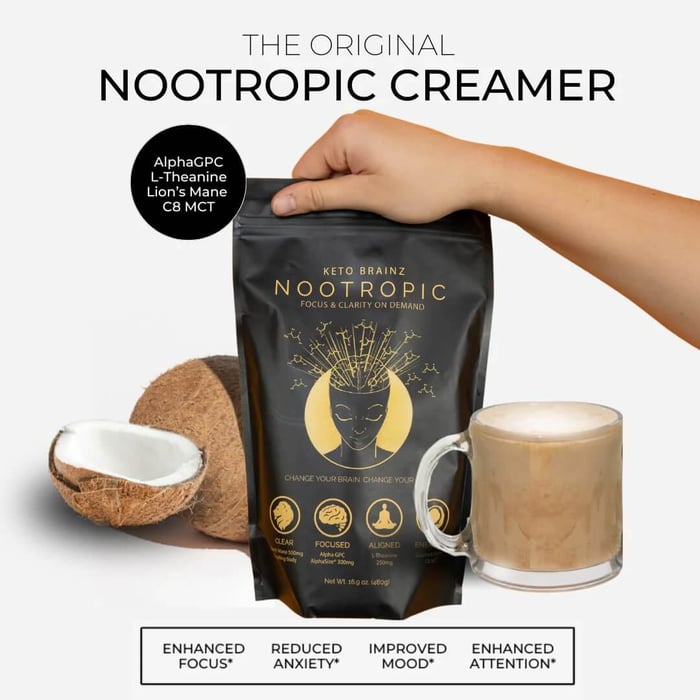
Keto Brainz® Nootropic Creamer is a clear example of how MCTs can be incorporated into everyday routines. Each serving includes C8 MCT powder blended with coconut milk powder to create a smooth base that mixes easily into coffee, tea, smoothies, or shakes. The formula also includes Lion’s Mane mushroom, Alpha-GPC, and L-Theanine, a combination often chosen for general support of focus, learning, and a calm, steady mental state. The creamer is designed as a simple daily addition rather than a standalone supplement, making it easy to use whether you prefer warm drinks or cold blends.
MCTs can elevate ketone availability even when carbohydrate intake varies, which makes them appealing to people who want some of the steadiness associated with nutritional ketosis without fully committing to a strict ketogenic diet. This includes those using approaches like intermittent fasting, where ketone levels naturally fluctuate throughout the day. This flexibility helps explain why MCT-based products, including Keto Brainz®, are increasingly used by people exploring nutritional strategies for supporting brain energy, daily productivity, and migraine resilience in a practical, everyday way.
How BHB Supports Ketosis (Brain Ritual®)
Beta-hydroxybutyrate, or BHB, is one of the primary ketone bodies used by the brain during nutritional ketosis. Unlike MCTs, which the liver converts into ketones gradually, BHB can be consumed directly through exogenous ketone formulations. After ingestion, it enters the bloodstream and raises circulating ketone levels without requiring fasting or very low carbohydrate intake. Because BHB crosses the blood–brain barrier using the same transporters as naturally occurring ketones, the brain can begin using it when glucose availability is low or when energy demands increase.
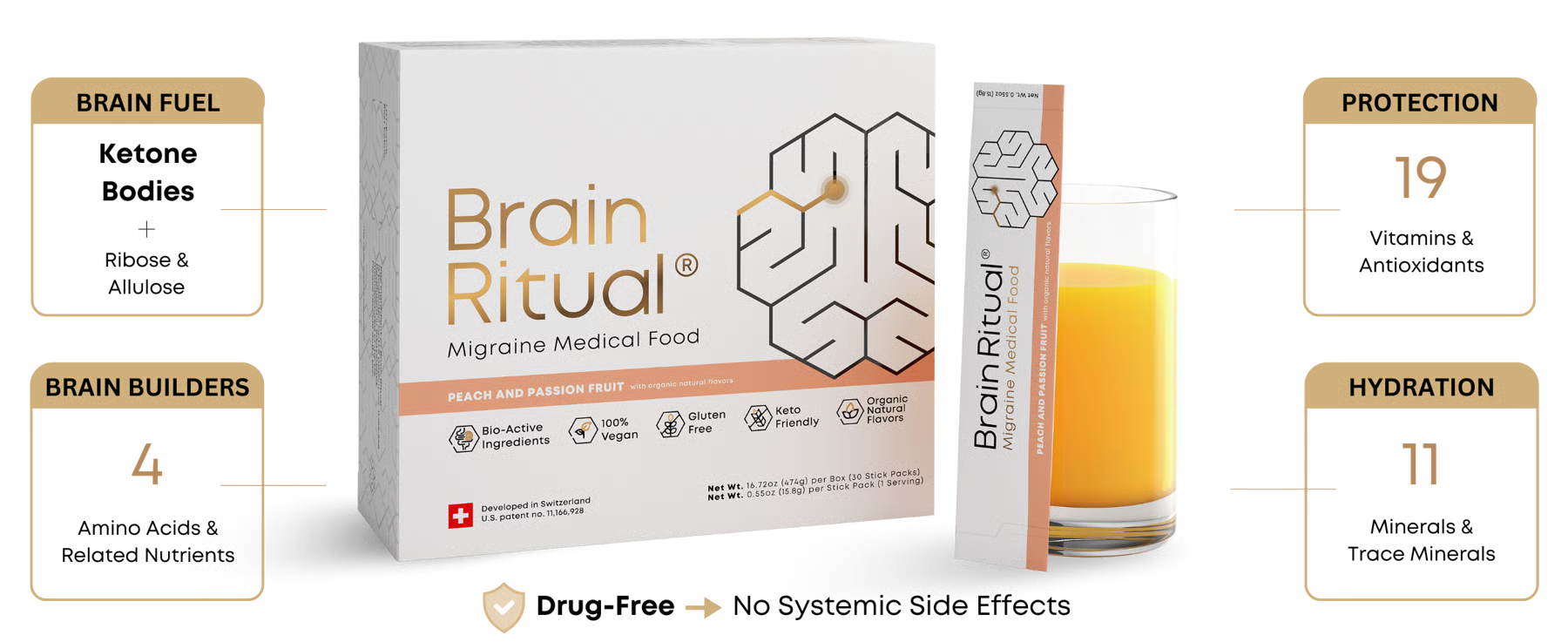
Brain Ritual® includes BHB in a bioidentical form that mirrors the ketone bodies naturally produced during ketosis. Using BHB in this way provides a predictable and practical method for supporting ketone availability during periods of higher cognitive demand, disrupted routines, or fluctuating energy, complementing the gradual ketone production supported by MCTs.
BHB has also been examined in relation to a range of pathways studied in nutritional ketosis research, including mitochondrial efficiency, oxidative balance, and neurotransmitter regulation. These areas relate to how the brain manages energy, responds to metabolic stress, and maintains day-to-day cognitive steadiness. Stable energy use and reduced oxidative stress are increasingly discussed in the context of cognitive performance, migraine resilience, and concepts such as cerebral energy deficiency (Gross et al., 2019).
BHB delivers ketones directly in a ready-to-use form, complementing the slower, nutrient-driven ketone production supported by MCTs. Brain Ritual® incorporates its bioidentical BHB within a broader formulation of vitamins, minerals, and amino acids designed to support balanced brain energy and overall metabolic steadiness, offering a complementary option for people exploring nutritional strategies aimed at clearer thinking and greater resilience to everyday stressors.
Disclaimer: Brain Ritual® is a medical food for the dietary management of migraine and is not intended to diagnose, treat, cure, or prevent any disease. This content is for informational and educational purposes only and is not intended as medical advice.
Synergy Between MCTs and BHB: Two Paths Toward Steadier Brain Energy
Sharing a similar philosophy, Keto Brainz® and Brain Ritual® take different yet complementary approaches to supporting clearer, more stable brain energy. MCTs, as used in Keto Brainz®, provide a form of fat that the body can gradually convert into ketones through everyday nutrition. Brain Ritual® delivers BHB in a form the brain can use immediately, helping ensure ketones are available when energy demands rise or glucose dips.
Together, they create a complementary way of supporting steadier, more reliable brain energy. MCTs contribute a steady background of ketone availability that can fit naturally into daily routines, while BHB offers reliable support during periods when clearer thinking, productivity, or energy consistency feel especially important, including times when the brain may be more sensitive or prone to increased demand, such as around migraine-prone moments. For some people, using both approaches together may offer a smoother, more dependable base for day-to-day cognitive performance.
Both brands place emphasis on supporting the brain with cleaner, more consistent metabolic fuel while avoiding the rapid rises and dips in glucose availability that can contribute to uneven energy throughout the day. For people exploring nutritional strategies aimed at clearer thinking, steadier productivity, and greater resilience to everyday stressors, MCTs and BHB provide complementary options that fit naturally into different routines, whether used separately or side by side.
Practical Takeaways
Here are some practical ways to put these ideas into everyday use:
Add MCTs to your morning routine - Keto Brainz® Nootropic Creamer blends easily into coffee, tea, smoothies, or shakes and offers a straightforward way to support gradual, nutrient-driven ketone production as part of everyday nutrition.
Stay hydrated and maintain electrolytes - Ketone metabolism relies on healthy fluid and mineral balance, so staying hydrated throughout the day remains important. Adding electrolytes can help maintain consistency, especially during busy or changing routines.
Use BHB for direct ketone availability - Brain Ritual® provides bioidentical BHB that the body can use immediately, making it easier to maintain ketone availability without strict dietary changes.
Keep daily patterns as steady as possible - Regular meals, consistent sleep schedules, and balanced routines are central foundations for day-to-day cognitive steadiness and long-term migraine resilience.
Explore what feels sustainable for your rhythm - Some people prefer the gentle, ongoing support of MCTs, others rely on the consistency of BHB, and some use both. The right approach is the one that works smoothly with your daily routine.
FAQs
Does coconut oil provide the same benefits as MCT oil?
Not exactly. Coconut oil contains some MCTs, but most of its fat is lauric acid (C12), which behaves more like a long-chain fat and produces fewer ketones. MCT products that focus on C8 or C10 tend to provide a quicker and more efficient rise in ketone availability.
Do MCTs and BHB work together?
Yes. MCTs and BHB support ketone availability in different ways, so some people choose to combine both. MCTs provide a gradual background source of ketones that fits into everyday nutrition, while BHB offers ketones the body can use immediately. When used together, they may offer a more flexible and consistent way to support steady brain energy.
Does ketosis help with migraine, or is “keto migraine” something different?
Some people use the term “keto migraine” to describe headaches that may appear when first starting a ketogenic diet. These headaches are usually related to changes in hydration or electrolytes and are not the same as migraine. When ketosis is discussed in relation to migraine, the focus is generally on how ketone bodies may help support more stable brain energy, rather than on the temporary headache effects that may occur during strict dietary changes.
Final Thoughts
MCTs and BHB offer two compatible ways to support clearer, steadier brain energy. Each works through a different pathway, yet both reflect a growing interest in nutritional strategies that focus on more consistent fuel, balanced metabolism, and reduced oxidative stress.
These ketone sources may fit naturally into everyday routines as part of broader efforts to maintain clearer thinking, stable productivity, and more resilient day-to-day wellbeing.
As research continues to explore how ketone bodies influence brain energy, mitochondrial function, and overall metabolic balance, MCTs and BHB remain practical tools for those interested in supporting a calmer, more reliable foundation for cognitive performance.